Call
Materials

Foam Roofing

Sprayed polyurethane foam (SPF) sealed under an elastomeric coating is one of the best-performing flat-roof systems available, and it shows up across Anthem on parapeted Spanish Colonial elevations, contemporary builds, and the flat patio sections of certain Tuscan-style homes.

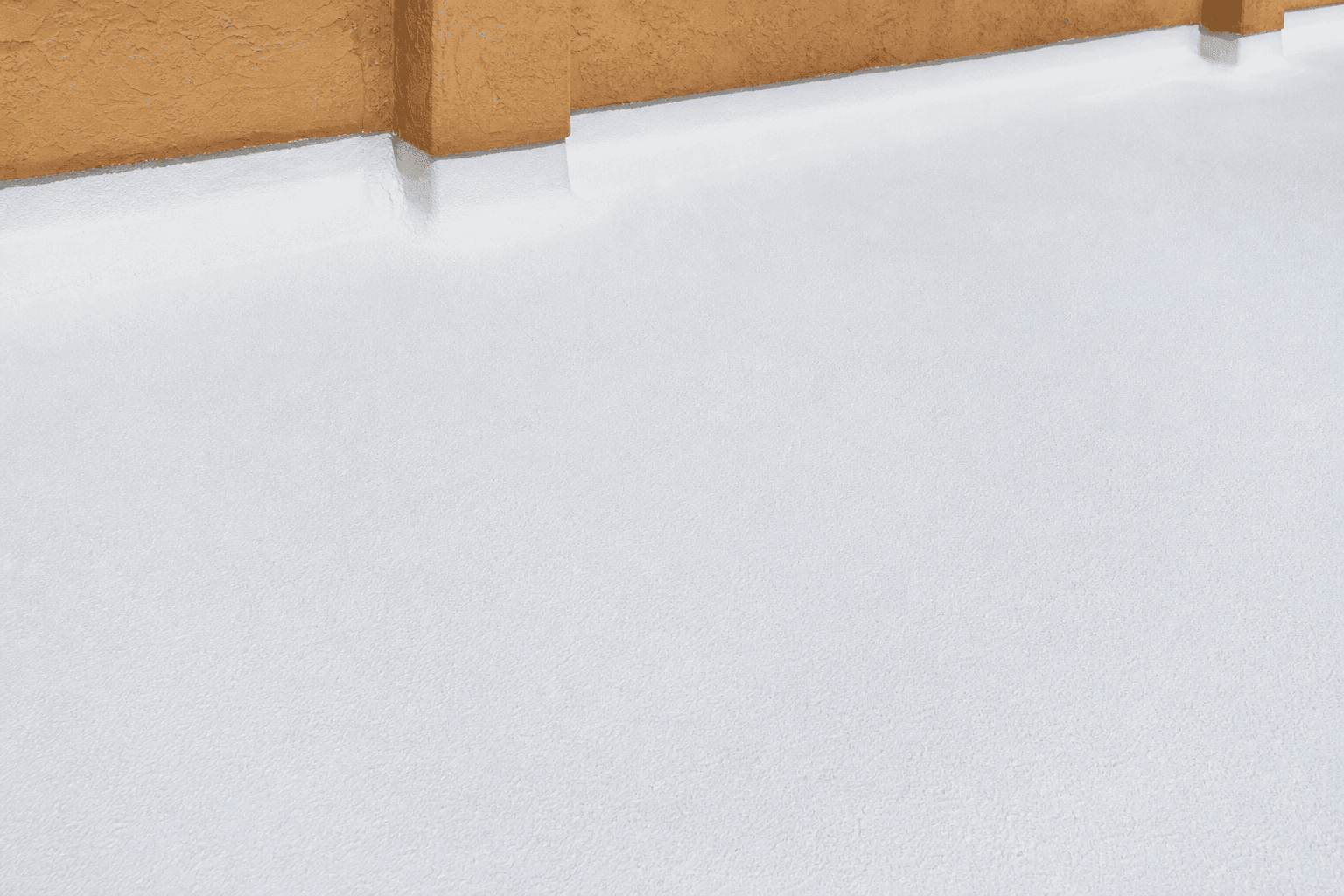
Close-up of a freshly recoated foam roof — sprayed polyurethane foam under a clean white elastomeric topcoat with subtle granule texture, parapet wall in warm Tuscan stucco at the top of the frame.
Foam · process photo

How a foam roof works

Two-component polyurethane foam is sprayed directly onto the deck, expanding into a continuous monolithic insulating layer. Once the foam is cured and surface-prepped, the elastomeric coating is applied in two coats, with granules embedded into the top coat for foot traffic and additional UV protection.

The coating is what does the waterproofing. The foam provides the thermal barrier and the substrate. Properly maintained, the system can last decades.

The 4–6 year recoat cycle

Foam is not 'install and forget.' The elastomeric coating sacrifices itself to UV at a roughly known rate. A proper recoat every 4–6 years is normal foam roof ownership and is what gives foam its long lifecycle. Skip the recoat past about year eight and you start losing foam to UV; skip it longer and the substrate begins to saturate.

When to rebuild instead

Rebuild is the answer when the foam itself has saturated, when there's evidence of long-term moisture intrusion below the substrate, or when impact damage has fractured the foam down to the deck. We'll inspect, document any moisture intrusion, and tell you honestly which side of that line your roof is on.

Thinking about a foam install?

A senior estimator on the roof. Photos of what we find. A clear scope of work. Within one business day of your request.

Or call (623) 555-0123
Call