Why Anthem Tile Roofs Are All Hitting the Underlayment Wall at the Same Time
Anthem broke ground in 1999 and most of the original Country Club and Parkside subdivisions were built between 2000 and 2005. Here's why that matters for your roof right now.
Anthem isn't a city — it's a master-planned community of about 30,000 people sitting unincorporated on the eastern slope of Daisy Mountain, thirty miles north of central Phoenix. Almost the entire housing stock was built in a tight window: the original Country Club and Parkside subdivisions between 2000 and 2005, the Hillsides and the later phases between 2005 and 2010. Most of the newest infill is post-2014.
That timing matters because of one specific component on every one of those roofs: the underlayment.
The tile is fine. The underlayment is not.
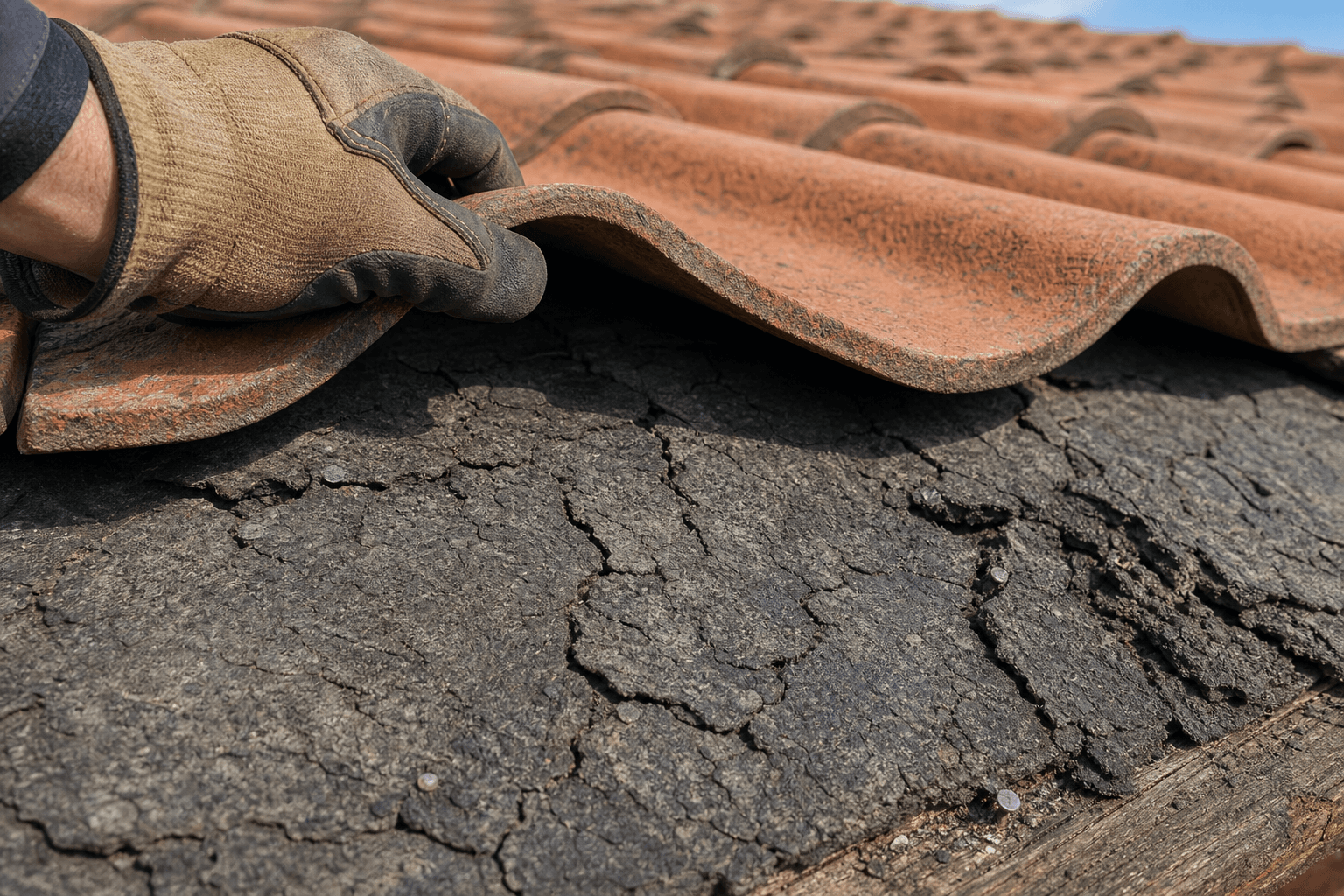
Concrete tile in Arizona will outlast your house. We've reroofed enough Anthem homes to be sure of that. What fails — what is failing right now across most of the community — is the waterproof barrier underneath the tile.
On almost every original Anthem build, that barrier is standard 30-pound felt. In our climate (high UV, high roof-deck temperatures, monsoon-driven sideways rain), 30-pound felt has a useful life of roughly 18 to 22 years. The original Anthem build window is now exactly 18 to 25 years old. Every original Country Club, Parkside, and Hillside roof is at the wall.
What that looks like from your living room
It usually starts as a stain on a ceiling after a hard monsoon. The tile is fine. The penetration flashing is mostly fine. But the felt under the tile is brittle and cracked, and the next storm that drives water sideways under the tile is the one that makes it through.
If your Anthem roof hasn't been touched since the original install and you're seeing any of the following, it's time for an inspection:
- A new ceiling stain after a monsoon event.
- Lifted or displaced ridge tiles on windward elevations.
- Visible felt fragments in the rain gutters or around the perimeter of the house.
- Daylight visible through the roof from inside the attic.
- A neighbor with the same floor plan who just reroofed.
What a properly specified reinstall looks like
We replace the felt with a synthetic high-temperature membrane rated for Arizona roof temperatures and Arizona UV. We replace flashings at every penetration. We rebed the ridge with a manufacturer-approved high-bond foam adhesive on Hillside elevations where wind exposure warrants it. We reinstall the existing field tile, source matching replacements for breakage, and hand you a written warranty when it's done.
Properly installed, that system will carry 25–35 years before the next reroof — meaningfully longer than the original 18–22.
The good news
Most Anthem roofs aren't emergencies yet. They're predictable. If you want to know where yours is in the curve, request an inspection. We'll lift a representative section, show you what's actually under the tile, and give you a written report. Whether you do the work with us or not, the report is yours to keep.